February 23, 2012

The Alternate Economy

In this blog I have gone into a lot of detail about one idea. This idea is divided into many smaller aspects which are represented by the various posts I have made up to this point. All of the posts have one common theme, however. All of the posts on this blog discuss the idea of Love. Generosity is the one aspect of Love on Earth that is the most unbalanced. It expresses itself most strongly in our economy. An economy is simply a set of rules and formulas that govern the flow of resources within a community. Our current economy is an economy of greed. In order to create any true change in our future, we must accept that our current system is broken. Once we are able to accept this, we can begin to work on changing ourselves. The Alternate Economy is first and foremost about personal change.

True Love

The following table presents my philosophy in the order it was meant to be read. Please, take the time to investigate my ideas. There are many other posts on this site as well, but I recommend reading these posts first. I hope you enjoy what I have to offer!

An Economy of Greed

A Quest for Truth

Balance
Love
Emotion
Outward Expressions

Generosity
Compassion
Hope


Inward Expressions

Passion
A Spirit of Receiving
Joy


Gratitude
Security
Karma
The Procession of Ages
One Life
The Truth
The Idea of Love is best expressed with Balanced Emotions
But how does that translate to our Economy?
An Economy of Generosity
Currency
Employment
Checks and Balances
February 23, 2012

Wish List – Experimental Farm

The results are in, the polls closed. It would seem that only one proposal did not receive the required 65% majority to pass. The results are as follows:

Beehive

93% Yes – 7% No – 14 votes

Legume Garden

100% Yes – 0% No – 11 votes

Pepper Patch

93% Yes – 7% No – 14 votes

Potato Patch

58% Yes – 42% No – 12 votes

Salad Garden

100% Yes – 0% No – 9 votes

Tamworth Sow

83% Yes – 17% No – 6 votes

I have designed a wish list for the upcoming farming venture. I would like to thank all of you in advance for coming this far. If we all chip in a small amount, this venture should not be a burden on any one of us. There are nearly 1000 followers to this blog and the combined total expense for all approved proposals is $2901.72. If every follower chipped in, it would be less than $3 per person to fund this farm for the entire season. I do not expect everyone to get involved, but the more that do, the easier this will become.

To get us started, the first thing we need is seeds to sow in Ian’s greenhouse to give the plants a healthy start at life. I feel that if you actually send seed to my address that is the best option. If you do not live in Canada, you could purchase the seed at a Canadian store, online, and have them shipped to my address. Or, if you prefer, you can send actual money, in the form of a check, or via paypal. Please note, that at this point I do NOT have a bank acount for the Alternate Economy. If you decide to send money, please send the check to my name, Tristan Nagler. A suggestion for how you wish to see the money spent (seeds, pig feed, beehive, etc) would be helpful as well.

All donations will be accounted for on this blog, unless you request anonymity. The sender, amount and final product purchased will all be visible for you to see. I would like to keep this as transparent and accessible as possible for those who wish to donate money.

PayPal - The safer, easier way to pay online!

Please note that the varieties of seed on the wishlist are just examples. I would like to have a large variety, so if there are two types of carrots and you want to donate carrot seeds, it is more important that you choose two hearty breeds, than that you send the exact breeds I ask for.

Once you have selected the seeds you will be sending, please leave a comment on the thread below indicating which items you have chosen. I will then cross them off the list, to avoid duplicates.

Please send all seeds to:

The Alternate Economy
c/o Tristan Nagler
113 Rue St Henri
Gatineau, QC
Canada
J8X 2Y3

Seeds

Lettuces
Arugula – 40 days ’til harvest – 100 seeds
Tango – 45 days ’til harvest – 100 seeds
Red Deer Toungue – 45 days ’til harvest – 100 seeds
Oak Leaf – 48 days ’til harvest – 100 seeds
Lolla Rossa – 50 days ’til harvest – 100 seeds
Catalogna Chickory – 55 days ’til harvest – 100 seeds
Cimmaron Romaine (Head Variety) – 65 days ’til harvest – 100 seeds
Boston Red (Head Variety) – 68 days ’til harvest – 100 seeds
Great Lakes (Head Variety) – 70 days ’til harvest – 100 seeds
Frisee Endive – 75 days ’til harvest – 100 seeds

Carrots
Early Coreless – 68 days ’til harvest – 300 seeds
Tendersweet – 75 days ’til harvest – 300 seeds

Radishes
China Rose – 35 days ’til harvest – 300 seeds

Beans
Bountiful – 46 days ’til harvest – 100 seeds
Romano, Bush – 63 days ’til harvest – 100 seeds

Snowpeas
Golden Sweet – 65 days ’til harvest – 100 seeds
Mammoth Melting Sugar – 70 days ’til harvest – 100 seeds

Corn
Golden Bantam – 83 days ’til harvest – 150 seeds
Stowell’s Evergreen – 100 days ’til harvest – 150 seeds

Cucumber
Boston Pickling – 52 days ’til harvest – 20 seeds
Long Green – 65 days ’til harvest – 20 seeds

Cabbage
Red Acre – 76 days ’til harvest – 50 seeds
Danish Ballhead – 90 days ’til harvest – 50 seeds

Cauliflower
Early Snowball – 60 days ’til harvest – 50 seeds

Brocolli
De Cicco – 55 days ’til harvest – 50 seeds
Romanesco – 80 days ’til harvest – 50 seeds

Bell Peppers
California Wonder – 75 days ’til harvest – 50 seeds
Buran – 90 days ’til harvest – 50 seeds

Hot Peppers
Jalapeno – 70 days ’til harvest – 20 seeds
Cayenne Thick Pepper– 75 days ’til harvest – 20 seeds
Birdseye Chili – 90 days ’til harvest – 20 seeds
Habanero – 100 days ’til harvest – 20 seeds

Tomatoes
Mexican Midget – 65 days ’til harvest – 20 seeds
Mini Orange – 66 days ’til harvest – 20 seeds
Roma – 78 days ’til harvest – 20 seeds
Brandywine – 90 days ’til harvest – 20 seeds

Onions
Red Burgundy – 95 days ’til harvest – 150 seeds
Barletta – 100 days ’til harvest – 150 seeds

Herbs
Chives – 50 seeds
English Thyme – 100 seeds
Sage – 50 seeds
Fennel – 50 seeds
Dill – 100 seeds
Peppermint – 50 seeds
Lemon Basil – 20 seeds
Sweet Basil – 20 seeds
Genovese Basil – 20 seeds
Rosemary – 100 seeds
Chamomile – 20 seeds

Flowers
French Marigold – 50 seeds
Geranium – 50 seeds
Nasturtium – 50 seeds
African Daisies – 50 seeds
Asters – 50 seeds
Lavender – 50 seeds

Expences

Tamworth Sow – $350
Bachyard Bee Hive – $295
Pig Feed – $950 (approx)
Vet Bills – $200 (approx)
Irrigation – $360
Beekeeping Equipment – $200 (approx)
3 kg Package of Bees – $80

Please send all seeds to:

The Alternate Economy
c/o Tristan Nagler
113 Rue St Henri
Gatineau, QC
Canada
J8X 2Y3

PayPal - The safer, easier way to pay online!

Again, thank you so much for your support in this Experiment towards living in Generosity. Together we will find a way to make a difference. All funds raised from the final sale of the produce from this farm will go towards the next venture our community decides upon. I feel buying some land of our own would be a good first step, but we shall see what everyone decides.

35 veggie co-op shares at $40 per month, over four months, should generate $5,600. Add to that $2,000 from the sale of Tamworth pigs and these five packages should bring in somewhere in the region of $7,500 for our community to use towards the next project. Plus, we will have plenty of produce left over to donate to the local soup kitchen to help spread the generosity Ian has shown us in lending us his land.

I am very excited about this summer and the upcoming venture and will once again thank everyone who decides to participate, even if it is only by supplying their knowledge and support!

February 22, 2012

Salad Garden – A Proposal

I am excited to announce that the Alternate Economy will be running an Experimental Farm this summer, with many thanks to Ian Walker of Mariposa Farms. We have been given access to a small plot of land to use, free of charge, to grow crops and raise awareness for living in generosity and Love. My final proposal for this land will be a plot 35 feet x 12 feet to grow different types of salad greens and herbs.

Costs

Lettuces do well together and in tandem with other herbs and flowers. After doing some research, it seems that carrots, mint, radishes and certain flowers are beneficial for lettuce growth. Mixing Sage, Thyme and Mint helps to detract insects and Daisies and Lavender also help to keep pests down by attracting predatory wasps that feed on the unwanted bugs. I have designed a garden which incorporates all of these elements and will allow us to harvest 10 different salad greens, carrots, radishes, herbs, dried flowers and teas.

By placing some flowers in amongst the lettuces we can help to reduce the bugs without pesticides. Lavender can be dried and used for its perfume. The other herbs in the garden can also be dried and sold, or used fresh. The mint can be dried and sold as tea packets. The carrots, radishes and salad greens can be added to our bi-weekly baskets to sell at market. Portions of the crops can be given to the local soup kitchen. This garden will yield all sorts of goodies and will be beautiful to boot!

Different varieties of vegetables mature at different times, so by choosing early, mid and late season varieties we can harvest our salad greens for several months of the year.

Seeds

Lettuces
Arugula – 40 days ’til harvest – $1.25/300 seeds
Tango – 45 days ’til harvest – $1.25/350 seeds
Red Deer Toungue – 45 days ’til harvest – $2.00/350 seeds
Oak Leaf – 48 days ’til harvest – $2.00/750 seeds
Lolla Rossa – 50 days ’til harvest – $1.25/750 seeds
Catalogna Chickory – 55 days ’til harvest – $1.25/100 seeds
Cimmaron Romaine (Head Variety) – 65 days ’til harvest – $1.25/350 seeds
Boston Red (Head Variety) – 68 days ’til harvest – $1.25/750 seeds
Great Lakes (Head Variety) – 70 days ’til harvest – $1.25/750 seeds
Frisee Endive – 75 days ’til harvest – $2.00/100 seeds

Carrots
Early Coreless – 68 days ’til harvest – $1.25/1200 seeds
Tendersweet – 75 days ’til harvest – $1.25/1200 seeds

Radishes
China Rose – 35 days ’til harvest – $1.25/350 seeds

Herbs
Chives – $1.25/150 seeds
English Thyme – $2.00/100 seeds
Sage – $4.00/50 seeds
Fennel – $2.00/50 seeds
Peppermint – We should have enough seeds from the legume garden to support this garden as well.

Flowers
African Daisies – $1.25/75 seeds
Asters – $1.25/100 seeds
Lavender – $1.25/50 seeds

Netting for Lettuces
400 square feet – $80.00

Total = $111.50

Business Plan

I would like to see the produce from this venture used for several goods. A small percentage of the seeds should be kept for next season, to seed another plot. The remaining harvest will be split in three, with one quarter being donated to the Salvation Army. This will be a good opportunity to reach out to the community and to increase awareness of our mission and cause. The other half will be sold as fresh produce in our vegetable co-op (along with the potatoes, peppers, honey and beans if we choose to grow them as well) to raise funds for the Alternate Economy. The final quarter should be used to sell to local restaurants as an organic salad mix. These products do not keep for long and do best when picked continuously. If we could find a restaurant or two that was interested in fresh produce, we could definitely generate some income for our upcoming ventures. High end loose leaf lettuces sell for up to $35/pound to Restaurants in Ottawa. I do not expect to sell our produce for that much, but it shows the potential for this market.

Salad Greens generally produce all season long, once they are mature. By harvesting the largest leaves around the edges and leaving the growing heart of the lettuce, the plant never stops growing, and generally does not go to seed either. With continuous care, this garden should produce salad mixes all throughout the season.

One idea put forward was to create a vegetable co-op where people can buy shares of the produce at market, and receive packages of veggies every week or two. There should be lots of lettuces available to add to our veggie co-op all season long, not to mention the carrots and radishes.

If we try to aim our garden at supporting 35 co-op shares, then this salad garden should fit the bill.

Benefit to Community

Lettuces require a little more maintenance but are a great starter crop for inexperienced farmers, because they are prolific producers of fresh salad mixes all season long. Assuming we mix in lots of natural fertilizing compost, water regularly and look out for bugs we should be able to make this work. Lettuces require some shade and help against slugs and other pests, but by planting different varieties of flowers and herbs, we can insure that we are harvesting healthy leafy greens from June through September.

By donating some crops to the Salvation Army we are helping to pass on the Generosity Ian has showed to us by lending us his land. We are also able to raise awareness for our cause.

By creating 35 vegetable co-op shares and filling the orders with lettuces, carrots, radishes and herbs, we will be able to raise funds for upcoming projects that the community decides upon. If we are able to secure a deal with a restaurant or two, we will really be in a good position to save some money for the next project.

Vote

The final Vote was 100% in favour after 9 votes.

February 22, 2012

Tamworth Sow – A Proposal

I am excited to announce that the Alternate Economy will be running an Experimental Farm this summer, with many thanks to Ian Walker of Mariposa Farms. We have been given access to a small plot of land to use, free of charge, to grow crops and raise awareness for living in generosity and Love. My fifth proposal for this land will be a tamworth sow, to add to Ian’s current stock of Wildboar. This is one that Ian seems particularly interested in, so keep that in mind. He is currently successfully raising wildboar, including Tamworth pigs, and will allow us to add a sow to his stock and keep some of her piglets to sell at market.

Costs

Wildboar are a great source of lean, delicious “pork-like” meat. They are also good for rooting around in the ground to help mix up earth before planting and adding the perfect fertilizer in the process. They are prolific breeders and can have up to 20 piglets in a season, which can be used as donations to the homeless and for sale in local markets to raise money for upcoming ventures.

A Tamworth Sow requires an initial start-up expense to purchase the pig, and then continuos upkeep in the form of pig feed. The piglets will require a larger amount of care than a veggie garden, but will also produce a higher return in profits. Luckily Ian already has a breeding boar to stud our female as well as a paddock set-up for both the adults and the piglets. To get started, all we need to do is purchase a sow and some feed.

Expenses

Tamworth Sow – $350.00

Feed – 120 x 20kg bags (assumes 8 piglets) – $950.00
Vet Bills – $200.00

Total = $1500.00

Business Plan

Tamworth sows usually have between 6 and 10 piglets every six months. We can choose to keep the sow for as many reproductive cycles as we wish, but it will require additional feed. When the piglets are ready for market, they will be sent to the local butcher to be prepared. Assuming we get 8 piglets, I would like to see them used for the following areas. 2 piglets will go to Ian for his help in rearing them. 2 piglets will be donated to the Salvation Army soup kitchen to help feed the homeless. And the remaining 4 will be sold at market to raise funds to purchase lands of our own, or to put towards other initiatives the community feels worthwhile.

I do not imagine the wildboar to be a necessary inclusion in the veggie co-op baskets, but the meat sells for upwards of $40/kg in specialty stores and is in high demand in the area. If we sell 4 tamworth pigs at the age of 28 weeks, we should be able to easily raise $500 a pig. After an initial investment of $1500 we are still able to donate half our crop and come out the other end with $2000 in our pockets.

Benefit to Community

Wildboar are great natural plows and fertilizers to help prepare fallow lands. By placing their pen on top of next years fields, we will be helping to continue the cycle of preparing the earth for planting. The start-up costs are essentially a one time thing, but the real cost is in the feed and the time spent caring for the animals. A sow can produce many litters, however, so we are limited only in our desire to continue the operation. This sow will hopefully last us many years and provide lots of piglets. Not to mention we can keep some of her babies to start a breeding stock of our own. Obviously fresh genetics will need to be brought in, if we decide to expand, but having a sow certainly helps.

By donating some meat to the Salvation Army we are helping to pass on the Generosity Ian has showed to us by lending us his land. We are also able to raise awareness for our cause.

The rest of the money raised will go towards investments that the community deems worthy down the road.

Vote

The final Vote was 83% in favour after 6 votes.

February 22, 2012

Guest Post: LOVE – The Law of Nature

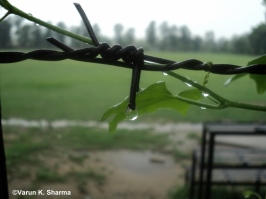
This poem was written by one of my blogging friends. Please visit his site at Varun Genius

Looking at the stars of night,
Gazing at the bright moonlight,
Admiring the beautiful dark sight,
Making a false story appear right,
Seeking for truth in the absence of light,

I realized the truth of ‘Love at first sight’.

 A human wishing to survive,
Struggling every second to remain alive,
Surrounded by faces that give fake smiles,
Running in races that run for miles,

 Feeling happiness by holding paper scraps,
Twitching hands that never sense the traps,
Learning things that never hold a sense,

Knowing and still walking on the path of perseverence,
Still unable to define LOVE in simple words,
Confused by the laws that creates different worlds,

Trying endlessly but in wrong direction,
Becoming restless in every tiny situation,
Enslaved by rules in every process,
And still wishing for an easy success!!

Had we developed the creative perception,
It could have helped in right progression,
Had we admired the beauty of nature,
It could have helped survival of every creature,
Had we understood the meaning of LOVE,
It could have aroused our ability to serve,
Had we interpreted the nature’s laws,

It could have removed existing flaws,
Had we realized who we really are,
It could have dominated peace over war.

Love is a feeling, Love is an art,
It’s a rhythm of vibrations in the core of heart,
It has no meaning in philosophy and literature,
Feel the essence of LOVE – The Law Of Nature….!!!

February 21, 2012

Legume Garden – A Proposal

I am excited to announce that the Alternate Economy will be running an Experimental Farm this summer, with many thanks to Ian Walker of Mariposa Farms. We have been given access to a small plot of land to use, free of charge, to grow crops and raise awareness for living in generosity and Love. My fourth proposal for this land will be a plot 30 feet x 20 feet to grow different types of beans and peas.

Costs

Peas and Beans do well together and in tandem with other vegetables. After doing some research, it seems that brocolli, corn, cabbage and cucumber are beneficial for legume growth. Mixing Dill, Rosemary and Mint helps to detract insects and Marigolds and Nasturtiums also help to keep pests down. I have designed a garden which incorporates all of these elements and will allow us to harvest snowpeas, green beens, corn, brocolli, cauliflower, cucumbers, herbs, edible flowers and cabbage.

By placing some flowers in amongst the beans we can help to reduce the bugs without pesticides. Nasturtiums can be used as edible flowers for garnishes in salads. The cucumber and corn can be used to make relishes. The mint can be dried and sold as tea packets. The snowpeas, beans, brocolli, cauliflower and cabbage can be added to our bi-weekly baskets to sell at market. Portions of the crops can be given to the local soup kitchen. This garden will yield all sorts of goodies and will be beautiful to boot!

Different varieties of vegetables mature at different times, so by choosing early, mid and late season varieties we can harvest our veggies for several months of the year.

Seeds

Beans
Bountiful – 46 days ’til harvest – $1.99/150 seeds
Romano, Bush – 63 days ’til harvest – $1.99/125 seeds

Snowpeas
Golden Sweet – 65 days ’til harvest – $2.75/50 seeds
Mammoth Melting Sugar – 70 days ’til harvest – $2.75/125 seeds

Corn
Golden Bantam – 83 days ’til harvest – $1.99/225 seeds
Stowell’s Evergreen – 100 days ’til harvest – $2.50/100 seeds

Cucumber
Boston Pickling – 52 days ’til harvest – $1.25/60 seeds
Long Green – 65 days ’til harvest – $1.25/50 seeds

Cabbage
Red Acre – 76 days ’til harvest – $2.00/200 seeds
Danish Ballhead – 90 days ’til harvest – $1.25/200 seeds

Cauliflower
Early Snowball – 60 days ’til harvest – $2.00/200 seeds

Brocolli
De Cicco – 55 days ’til harvest – $2.00/200 seeds
Romanesco – 80 days ’til harvest – $1.25/100 seeds

Herbs
Dill – $2.00/100 seeds
Peppermint – $2.00/100 seeds
Rosemary – $2.50/50 seeds

Flowers
Nasturtium – $2.50/70 seeds
Marigold – We should have enough seeds from the pepper patch to support this garden as well.

Support for pea and bean plants
String – $4.00/roll
Stakes – Gathered from surrounding brush

Irrigation
100′ hose – $40.00
6 sprinklers – $120.00

Total = $197.97

Business Plan

I would like to see the produce from this venture used for several goods. A small percentage of the seeds should be kept for next season, to seed another plot. The remaining harvest will be split in three, with one quarter being donated to the Salvation Army. This will be a good opportunity to reach out to the community and to increase awareness of our mission and cause. The other half will be sold as fresh produce in our vegetable co-op (along with the potatoes, peppers and honey if we choose to produce them as well) to raise funds for the Alternate Economy. The final quarter should be used to prepare relishes, pickles, coleslaws and chutnies. These products will keep much longer, can be transported further and allow my good friend Linette to showcase her cooking skills. Plus they make for good bartering tools to reward Ian for his generosity in lending us his land. Ian can sell the jars in his small restaurant and use the funds raised to help support his small farming operation.

One idea put forward was to create a vegetable co-op where people can buy shares of the produce at market, and receive packages of veggies every week or two. The large variety of produce harvested from this garden over 4 months should be enough for 35 people to get a decent number of veggies.

If we try to aim our garden at supporting 35 co-op shares, then this legume garden should fit the bill. Not to mention the bonus of cucumbers, cauliflower, brocolli, corn, herbs, mint tea satchels and pickled preserves.

Benefit to Community

Legumes are a great starter crop for inexperienced farmers, because they are prolific, can be harvested for most of the season and add nurtrients back to the soil for the other plants to share. Assuming we mix in lots of natural fertilizing compost, water regularly and look out for bugs we should be able to make this work. They are a fairly low maintenance crop, with a high yield. By planting different varieties of beans and peas, we can ensure that we are harvesting from June through September.

By donating some crops to the Salvation Army we are helping to pass on the Generosity Ian has showed to us by lending us his land. We are also able to raise awareness for our cause.

By creating 35 vegetable co-op shares and filling the orders with snowpeas, cabbage, corn, relishes as well as other veggies, we will be able to raise funds for upcoming projects that the community decides upon.

Vote

The final vote was 100% in favour after 11 votes

February 21, 2012

The Meaning of Life

Gather round, it is time for the final piece of the puzzle.  The answer you have all been looking for.  The big question.  The ultimate reason for our being, our existence, our lives.

I have come to discover the most sought after answer in the Universe.  Why?  Why are we here.  What is the point?  Why life?  Why death?  Why pain?  Why Love?

The answer is incredibly simple, not surprisingly.  It is, in fact, only one word long.  All of life can be explained with this one word.  All of our suffering, all of our joy.  Every life, no matter how trivial, how short, how evil, how great can be explained with this one word.

So how did I come to know this word?  Through awareness and the simple act of listening and observing the world around me.  Everywhere I look this word echoes in the back of my mind.  It explains every act, good and evil.  It explains every life, the most beautiful and the most horrid.

The meaning of life is Experience.


Photo by: Oshinn Reid

That is it.  That is why we are here.  It is the contract we signed.  The motivating force of the universe.  Experience.  We have come to Earth to experience every single experience there is to experience.  The good ones and the bad.  All things in our Universe start with an idea.  It is the core thought of all creation, as far as I can determine.  What thing has arrived before its idea, that you are aware of?  It would seem everything, even life itself, was first an idea before it could ever be an experience.  The Universe is the representation of the thought “Idea”.  By agreeing to incarnate in this Universe we have agreed to experience the Idea.

There is nothing more or less to it.  The thing that makes it seem so daunting is the infinite nature of Ideas and therefore Experiences.  If it can be imagined, it must be experienced.  Obviously this cannot be accomplished in one lifetime.  Nor can it be accomplished by one soul.  The task of Experience necessitates many souls engaging in many lives for this contract to ever be fulfilled.

There is a reason that we do not remember our past incarnations.  It is a very logical one.  The reason we do not remember our past lives is because if we did we would not appreciate our current experiences as being unique or important.  If we could remember being a slave owner, it would change our experience of being a slave.

Through the process of Karma, our souls have agreed to experience every experience they can possibly imagine, in the pursuit of the Perfect Idea.  Welcome to our Universe.  Welcome to your life.  The great adventure.

I have come to realize, through my acknowledgment of the meaning of life, that this particular life I am living has a purpose.  I am here for a reason.  I know who I am and why I am here.

I am Love and I am here to prove to myself that a Utopia is possible on this Earth.  That is the purpose of my life.  I will not rest until I see it fulfilled.  It is the experience that I have agreed to participate in during this life.  The experience of transforming a planet of pain and suffering into one of Love and generosity.  By proving to myself that I am both worthy of receiving Love and capable of giving Love to and from everyone in my life, I will in turn be creating the Utopia I so desire around me.  By sharing my thoughts, my life, my personal transformation, I will in turn be creating the change I wish to see.  By changing myself into the sort of person worthy of a Utopia, I will in fact be creating a Utopia.

I have found my purpose in life.  I have found my meaning.  My goal.  My driving force.  I have found my true self.  I am here, in this life, to prove to myself that a Utopia is possible on this Earth.

I feel there are many out there searching for purpose.  For meaning.  For a reason to explain away all of their suffering and pain.  I offer you to join me.  Not in changing others.  But in changing yourself.  If you seek purpose.  If you seek meaning.  Perhaps the meaning I have found will be useful to you as well.

Please, consider this, if the meaning of life is to experience every experience there is to experience, and the Earth has yet to see a Utopia, and the Age of Aquarius is upon us, and everyone feels an urge to change the world around them…  A Utopia is not only possible, it is needed.  Our souls need this challenge.  Need this adventure. Need to prove they can do this.  Need to rise from the ashes to produce something of marvel.

The time is now.  The stars are in allignment.  The Idea has been born.  The Experience awaits.

The purpose of my life is to prove to myself that a Utopia is possible on this Earth.  What is the purpose of yours?

February 20, 2012

Beehive – A Proposal

I am excited to announce that the Alternate Economy will be running an Experimental Farm this summer, with many thanks to Ian Walker of Mariposa Farms. We have been given access to a small plot of land to use, free of charge, to grow crops and raise awareness for living in generosity and Love. My third proposal for this land will be a colony of bees, raised in a beehive. This is one that Ian seems particularly interested in, so keep that in mind. He has successfully kept bees in the past and says they are low maintenance and low cost and hugely beneficial to the whole property.

Costs

Bees are great pollinators and help to increase yields of all the veggies in the garden. They also produce honey, which can be extracted and bottled for inclusion in the co-op packages, donations to the homeless and for sale in local markets.

Beehive

A Beehive requires several start-up expenses, but relatively little maintenance and care. Bees pretty much do their own thing, feed themselves and take care of their hive. All we need to do is harvest the honey once a week. To get started, however we need to purchase a beehive, beekeeper clothing, a smoker and, of course, a colony of bees.

I have done a bit of research and really like this hive “The Backyard Hive”. Look to the short video below for more info.

Equipment

Backyard Beehive – $295.00
Shipping – $130.00

Bee Brush – $5.00
Grafting Tool – $5.25
Hive Lifter Tool – $16.85
Beekeeping Veil (Mask) – $72.75
Gloves – $15.90
Serrated Uncapping Knife – $31.25
Double Strainer – $20.25
Smoker – $28.25
Other – $25.00

3 lb Package of Bees – $80.00

Total = $725.50

Business Plan

I would like to see the honey produced from this venture used for several goods. The harvest will be split in three, with one quarter being donated to the Salvation Army. This will be a good opportunity to reach out to the community and to increase awareness of our mission and cause. The other half will be included in our vegetable co-op (along with the potatoes, and peppers, if we choose to grow them as well) to raise funds for the Alternate Economy. The final quarter should be given to Ian to sell in his small restaurant attached to his farm. It will be our way of thanking him for his generosity in using his lands.

An average beehive yields about 30 pounds of honey in a growing season. That is about 65 x 200g bottles of honey.

We will donate 15 jars to the Salvation Army and 15 to Ian. This leaves us 35 jars to sell.

One idea put forward was to create a vegetable co-op where people can buy shares of the produce at market, and receive packages of veggies every week or two. 35 honey jars harvested should be perfect for 35 co-op shares.

If we try to aim our garden at supporting 35 co-op shares, then this beehive should fit the bill. Not to mention the bonus of increased yields in pepper, tomatoes, herbs, and flowers.

Benefit to Community

Bees are a great starter project that require less active care than other animals. The start-up costs are essentially a one time thing. Beehives are portable and once our community owns one, we can move it to any property we choose. This hive will hopefully last us many years and provide lots of honey. Not to mention the advantage of having pollinators in our gardens. We will surely see our yields increasing with the addition of a beehive.

By donating some honey to the Salvation Army we are helping to pass on the Generosity Ian has showed to us by lending us his land. We are also able to raise awareness for our cause.

By creating 35 vegetable co-op shares and filling the orders with jars of honey we will be able to raise funds for upcoming projects that the community decides upon.

Vote

The final vote was 93% in favour after 14 votes.

February 16, 2012

Pepper Patch – A Proposal

I am excited to announce that the Alternate Economy will be running an Experimental Farm this summer, with many thanks to Ian Walker of Mariposa Farms. We have been given access to a small plot of land to use, free of charge, to grow crops and raise awareness for living in generosity and Love. My second proposal for this land will be a plot 50 feet x 20 feet to grow different types of peppers.

Costs

Peppers do well in tandem with other vegetables. After doing some research, it seems that tomatoes and onions are good for pepper growth. Mixing Basil, Rosemary and Chamomile helps to detract insects and Marigolds and Geraniums also help to keep pests down. I have designed a garden which incorporates all of these elements and will allow us to harvest bell peppers, 4 types of hot peppers, herbs, flowers, tomatoes and onions.

By placing some flowers in amongst the peppers we can help to reduce the bugs without pesticides. Chamomile can be used for small tea packets. The tomatoes and Onions can be used in pasta sauces as can the basil. Pesto and hotsauces can be made and canned. The bell peppers can be added to our bi-weekly baskets to sell at market. Portions of the crops can be given to the local soup kitchen. This garden will yield all sorts of goodies and will be beautiful to boot!

Different varieties of vegetables mature at different times, so by choosing early, mid and late season varieties we can harvest our veggies for several months of the year.

Seeds

Bell Peppers
California Wonder – 75 days ’til harvest – $10.00/80 seeds
Buran – 90 days ’til harvest – $7.50/75 seeds

Hot Peppers
Jalapeno – 70 days ’til harvest – $5.00/50 seeds
Cayenne Thick Pepper– 75 days ’til harvest – $3.00/40 seeds
Birdseye Chili – 90 days ’til harvest – $3.00/40 seeds
Habanero – 100 days ’til harvest – $3.00/40 seeds

Tomatoes
Mexican Midget – 65 days ’til harvest – $2.50/20 seeds
Mini Orange – 66 days ’til harvest – $2.50/20 seeds
Roma – 78 days ’til harvest – $2.50/20 seeds
Brandywine – 90 days ’til harvest – $2.50/20 seeds

Onions
Red Burgundy – 95 days ’til harvest – $1.25/150 seeds
Barletta – 100 days ’til harvest – $1.25/300 seeds

Herbs
Lemon Basil – $2.50/50 seeds
Sweet Basil – $1.50/50 seeds
Genovese Basil – $2.50/50 seeds
Rosemary – $2.50/50 seeds
Chamomile – $1.25/50 seeds

Flowers
French Marigold – $2.50/60 seeds
Geranium – $10.00/16 plants

Trelis for Tomatoes
16 plants – $40.00

Netting for Tomatoes
16 plants – $20.00

Irrigation
200′ hose – $80.00
8 sprinklers – $160.00

Total = $366.75

Business Plan

I would like to see the produce from this venture used for several goods. A small percentage of the seeds should be kept for next season, to seed another plot. The remaining harvest will be split in three, with one quarter being donated to the Salvation Army. This will be a good opportunity to reach out to the community and to increase awareness of our mission and cause. The other half will be sold as fresh produce in our vegetable co-op (along with the potatoes, if we choose to grow them as well) to raise funds for the Alternate Economy. The final quarter should be used to prepare pestos, pasta sauces, hot sauces and chutnies. These products will keep much longer, can be transported further and allow my good friend Linette to showcase her cooking skills.

Bell peppers generally yield around 6 to 10 fruit per plant. If we expect a lower return (due to our inexperience) we should hope for around 6 peppers per plant. 56 plants x 6 peppers would be a harvest of 336 peppers throughout the season.

We will donate 80 peppers to the Salvation Army. This leaves us 250 peppers to sell.

One idea put forward was to create a vegetable co-op where people can buy shares of the produce at market, and receive packages of veggies every week or two. 250 peppers harvested over 2 months should be enough for 35 people to get about 3 or 4 a month.

If we try to aim our garden at supporting 35 co-op shares, then this pepper patch should fit the bill. Not to mention the bonus of tomatoes, onions, hot peppers, herbs, chamomile tea satchels and sauces.

Benefit to Community

Peppers are a great starter crop for inexperienced farmers, because they are not too difficult to maintain. Assuming we mix in lots of natural fertilizing compost, water regularly and look out for bugs we should be able to make this work. They are a fairly low maintenance crop, with a high yield. By planting different varieties of peppers, we can insure that we are harvesting from August through September.

By donating some crops to the Salvation Army we are helping to pass on the Generosity Ian has showed to us by lending us his land. We are also able to raise awareness for our cause.

By creating 35 vegetable co-op shares and filling the orders with bell peppers, hot peppers and hot sauces as well as other veggies, we will be able to raise funds for upcoming projects that the community decides upon.

Vote

The final Vote was 93% in favour after 14 votes.

February 16, 2012

Guest Post – Unconditional Love

Please visit Raintree Branches’ Blog for this beautiful poem.

Unconditional Love.

Follow

Get every new post delivered to your Inbox.

Join 988 other followers